
How to Win Back Lost Customers: A Small Shop's Guide
Your regulars stopped coming and you don't know why. Here's when to call a customer lost, how to find them, what to say and what the treat really costs.


To win back lost customers, decide when a regular counts as lost, find out why they stopped, then send one short, personal message with a small reason to come back this week. For a café or a salon, the treat costs less than a pastry, and the message works best on the phone your customer already carries.
Most guides on this are written for airlines, streaming apps and national chains. This one is for the owner who looks up on a quiet Monday and realises Ana, Tom and the woman with the oat flat white haven't been in for a month. It covers the by-hand way first, then the automatic one with win-back campaigns.
When does a regular count as "lost"?
A regular is lost when they've missed about twice their usual gap between visits. That's our rule of thumb, not a law. It works because one missed week is life; two missed rhythms is a new habit forming somewhere else.
| Your business | Usual gap | Call them lost after |
|---|---|---|
| Café, bakery | Every few days to weekly | 2–3 weeks |
| Lunch spot, bar | Weekly | 3–4 weeks |
| Hair or nail salon | Every 4–6 weeks | 10–12 weeks |
| Bike shop, gift shop | Every 2–3 months | 5–6 months |
Don't wait for the perfect number. Pick one line for your shop and act on it. A message that arrives too early just reads as a friendly hello. One that arrives after six months reaches someone who has already found a new favourite place.
Why do regulars stop coming?
Usually for ordinary reasons. Their routine changed: a new job, a new gym, a baby. A competitor opened closer to home. Or something small went wrong and nobody noticed.
The small things matter more than owners think. A request met with a flat "no" ("we can't do half-and-half"). A promise the shop couldn't keep ("your cake will be ready by 10"). A feeling of being just another order. Customers rarely complain about these. They simply go elsewhere.
Some you can't win back. If someone moved across town, no offer will fix the commute. Accept that, and spend your effort on the ones who drifted for reasons you can fix.
You often notice lost regulars by the gaps: the window table that's empty at 8:30, the order you no longer start making when the door opens. Noticing is the easy part. Acting on it is where most shops stop.
How to win back lost customers in 7 steps
Step 1: Draw your "lost" line
Use the table above. Write the number down where your staff can see it: "anyone we haven't seen in 3 weeks". One shared number turns a vague worry into a list you can act on.
Step 2: Find the quiet regulars
With paper punch cards, you can't. The card sits in the customer's wallet, and you have no record of who stopped. Ask your staff to list the regulars they miss. It's rough, but it's a start.
If your customers carry a loyalty card on their phone, each visit is recorded when the card is scanned. In Passtastic, the Customers page shows how often each person comes and when they last did. It also builds a ready-made group of everyone who hasn't been back in 30 days.
This is the small-shop version of what big brands call recency and frequency scoring. You only need two questions: how often did they come, and when was the last time?
Step 3: Ask one question
Before you give anything away, ask why. Keep it to one question your staff can ask at the counter or you can send in a message: "We've missed you. Was there anything we could have done better?"
Most people won't answer. The few who do will tell you something you can fix: the queue at 8 am, a price change, the new barista who never smiles. Fix it before you invite everyone back. A message promising "the coffee you loved" is worse than none if the coffee has changed.
Step 4: Choose a treat that costs little
Give them a reason to come this week, not a discount for ever. A free pastry, an upgrade, double stamps on their next visit. Small treats work because they say "we noticed", not "we're desperate".
Here's the maths for an invented café, the Corner Café, with invented prices. The owner messages 20 lapsed regulars. A pastry sells for €3.20 and costs about €0.90 to make. Say 5 people come back:
- The five pastries cost 5 × €0.90 = €4.50.
- If each also buys a €3.50 coffee, that visit brings in 5 × €3.50 = €17.50.
- If 3 of the 5 go back to weekly visits for the next month, that's 3 × 4 × €3.50 = €42 more.
The pastry is the cheapest part. Compare that with an 80%-off code, which teaches people to wait for the next one.
Step 5: Write the message
Short, warm and specific. Name what they usually order if you know it. Give one clear offer and one deadline. Here are three you can copy (each under 160 characters):
We've missed you at Corner Café! Your next flat white comes with a free pastry, any day this week. See you soon. — Marta
Hi from the salon 👋 It's been a while. Book before Sunday and your next treatment comes with a free hand massage. — Lena at Studio Nine
Your bike's due a check. Pop in this month and the safety check is on us. — Dan at Spoke & Chain
Avoid "We value your business" and anything that sounds like a mail-merge. Read it aloud. If you wouldn't say it to them across the counter, rewrite it.
Step 6: Send it where they'll see it
An email can sit unread in a crowded inbox, and you may not have their phone number anyway. A wallet card can show your message as a notification on the customer's lock screen, the same way an app's push notification does, with no app to install.
In Passtastic, you can send a message by hand on every plan. To reach only the people who've stopped coming, open the Customers page, click Add condition, choose Last visit → Not in the last 30 days, then tap Message. It goes to everyone in that list. You can also message one person from their profile, or everyone on the card from the Campaigns tab. Keep it under 160 characters; links, images and formatting aren't supported in the notification. All plans include unlimited push notifications with no per-message fee, and if your customer portal is on, every message also stays in its inbox.
Step 7: Count who came back
Give it two weeks. Count who came in, who used the offer and who came back a third time. That last number is the one that matters.
On Multi-Location and up, Passtastic shows how many customers each automatic win-back reached and how many claimed the reward. On paper, a tally sheet by the till does the same job.
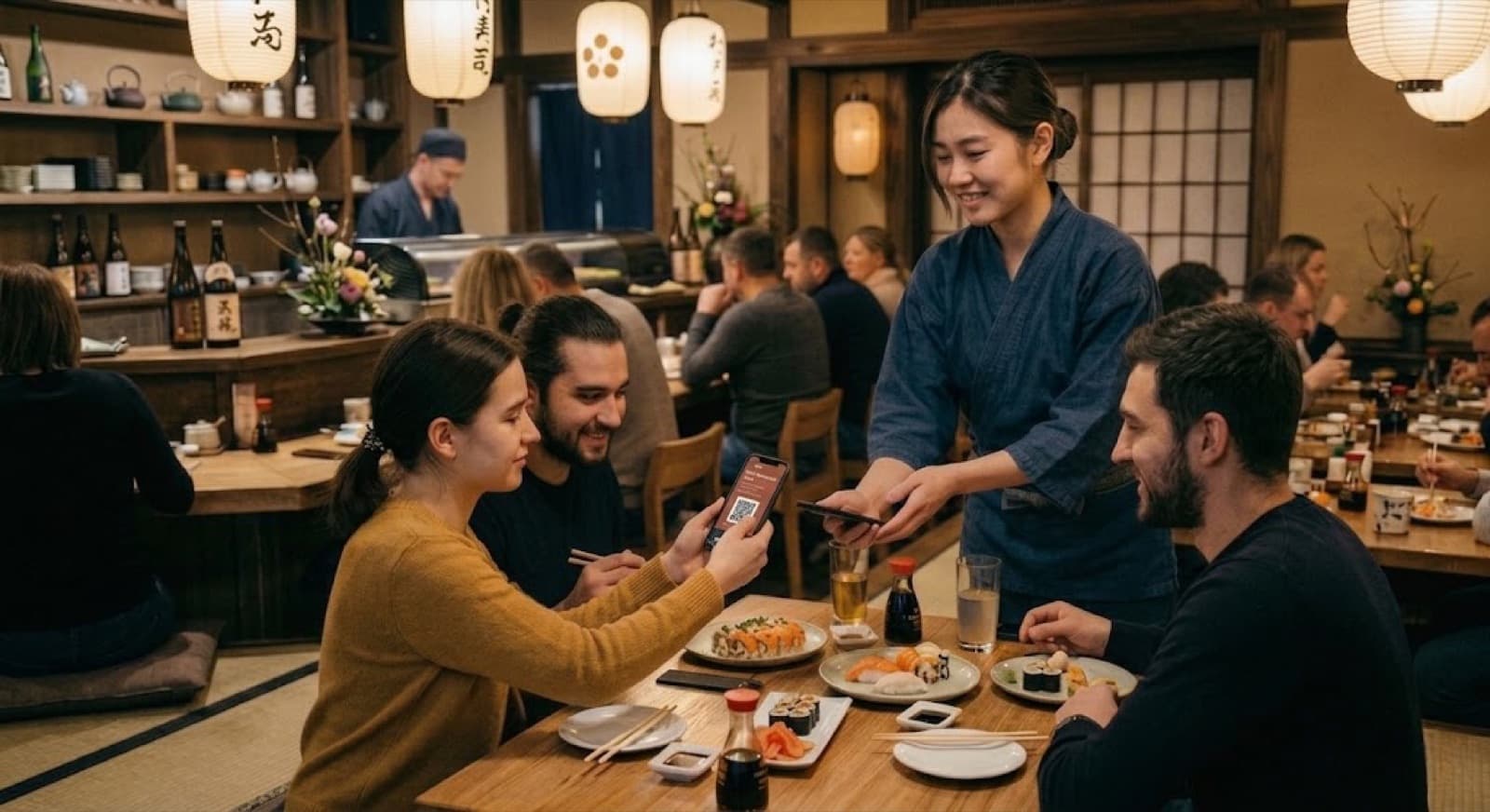
Make it automatic, but keep it personal
Sending by hand works for a handful of people. Once you have more, let the card do the watching.
Passtastic has a Winback trigger that fires "when a customer hasn't visited in X days" (for example, after 30 days). You choose whether it sends a message only, or a message plus a reward that's valid for 3 days, a week, two weeks, a custom number of hours or with no limit. Each customer gets at most one message every 4 hours, and you set how often the win-back can repeat.
One thing to know: automatic win-back is on Multi-Location ($99 a month, up to 3 locations) and Groups & Brands. Single Location ($39 a month) has the automatic birthday message; there, you send win-back messages by hand. Both are free to start: 14 days, no card needed. See pricing for the current plans.
Automation can also hurt you. Customers can tell a robot from a person. Automate the timing; don't automate the voice. Write the win-back in your own words once, sign it with a real name, and check it every few months.
Mistakes that push lost customers further away
- Discounting too deep. A big discount brings back bargain hunters, then they leave again.
- Messaging everyone. Your Tuesday regular doesn't need a "we miss you". Send only to the people past your line.
- Sending too often. One win-back, maybe one reminder. After that, let them be.
- Saying "no" at the counter. Spend 15 minutes with your team listing the requests you usually refuse. For each one, decide: a real no, an alternative, or a yes. Many lost regulars left over a small no.
- Promising what you can't deliver. If you can't do Saturday bookings, don't put "any day" in the message.
Keep the next regular from drifting
Winning someone back costs more effort than keeping them. Two things help most.
First, make the first reward reachable. Across 209 Passtastic stamp-card businesses with at least 10 members, the median business saw just 1.4% of new members redeem a reward within 60 days of joining (members who joined between August 2025 and August 2026). Most people who join don't redeem a first reward in their first two months. Check how many stamps your card asks for: if a weekly customer needs three months to finish it, they'll drift before they get there.
Second, give your best regulars something others don't get. First taste of the new menu. A seat saved on busy mornings. A birthday treat, which runs automatically on every Passtastic plan. It's less about the freebie and more about what makes customers feel rewarded: being seen.
It's a great platform for implementing loyalty programs. It has an interesting analytics section, and the ability to send messages on demand or based on proximity to the store is really useful.

See who stopped coming and send them a message from the card they already carry. Free to start, 14-day trial, no card needed.
Create your loyalty card