

Gift Cards for Small Business: How to Sell Them Before Christmas
Gift cards get your shop paid in December for visits that land in January. Here's how to sell them online and at the counter, what they cost, and when to start.


Gift cards are the one thing your customers buy for someone else, and you get paid the day they buy. For a small business that makes them two things at once: money in December and a new customer in January. This guide covers paper versus digital, how selling online and at the counter works, what it costs, and a simple plan to be ready before the Christmas rush.
Why are gift cards worth it for a small business?
Because the money comes first and the visit comes later. Someone pays you €50 in December. The person they gave it to walks in during January, which is quiet for most shops. You get December cash for a January visit.
The visit is often bigger than the card. Six out of ten people who get a gift card spend more than its value. They come in for a €50 treatment and leave with a product, or come for coffee and stay for lunch.
And the person holding the card is often new to you. Four in ten people who get a gift card are first-time customers. Your regular buys it, their sister uses it, and now she knows where you are. No ad gets that kind of introduction.
Before the how-to, one thing to keep in mind: a gift card is money you owe until it's spent. Treat any balance that goes unused as a small bonus, never as the plan. The win is the cash up front and the new face at the door, so make spending it easy.
Paper vouchers, plastic cards or digital: which should you sell?
Most small shops start with paper vouchers from the printer. They work, until someone loses one, copies one, or asks you to post it.
| Paper voucher | Plastic card | Digital gift card | |
|---|---|---|---|
| Cost before you sell one | Printing | A batch of cards | Nothing |
| Can be lost | Easily | Yes | No, it's on their phone |
| Can be bought online | No | No | Yes, from your link |
| Arrives on the day, even last minute | Only by hand | Only by hand | Yes, by email |
| You know who holds it | No | No | Yes, name and email |
| Spent across several visits | Hard to track | Needs a system | Balance updates by itself |
Paper still has one thing going for it: something to hand over. If your customers love a card in an envelope, keep a few printed vouchers at the till. A good digital gift card can give that moment back, though: the person opens an envelope sealed with your logo before they see what's inside.

We were spending so much time taking things to the post office and managing physical cards.

How do you sell gift cards online?
You need one link people can buy from, and a card that lands in their phone wallet. Here's how it works with Passtastic, start to finish.
Step 1: Set the amount
Create a gift card (in Passtastic the card type is called Store credit) and set the price and the value, say €50 for €50 to spend. You can have more than one: €25 for a small thank-you, €50 or €100 for the people who really want to treat someone. If you sell treatments or bundles ("5 coffees", "a cut and colour"), a bundle can be a gift too.
Step 2: Put the link where people already look
Your card gets its own buy page. Put the link in your Instagram bio, on your Google profile and on your website, and print the QR code by the till. In December, add one line to your posts: "Gift cards: buy in a minute, they arrive by email."
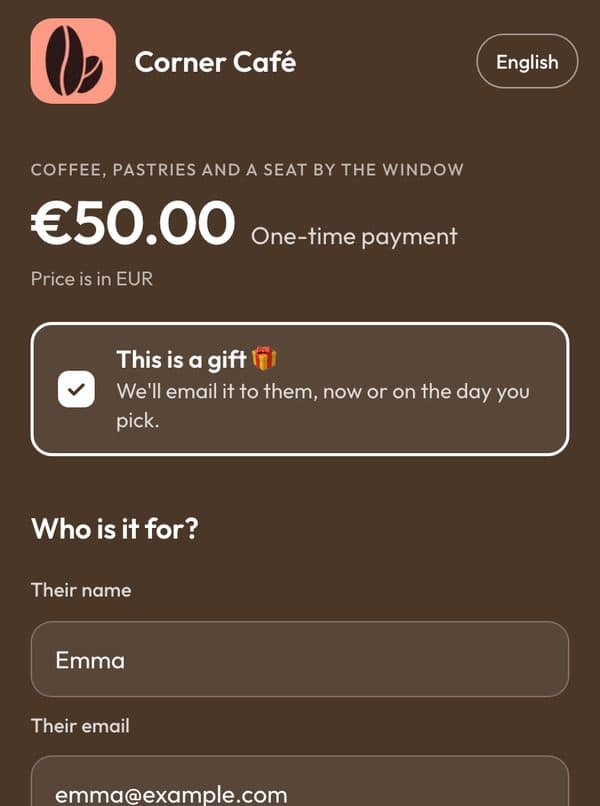
Step 3: The buyer ticks "This is a gift"
On the buy page, the buyer ticks This is a gift, enters the person's name and email, writes a message and picks when it should arrive: now, or on a date and time. Christmas morning at 8:00 works. So does a birthday next March. They pay online, and the money goes to your bank.
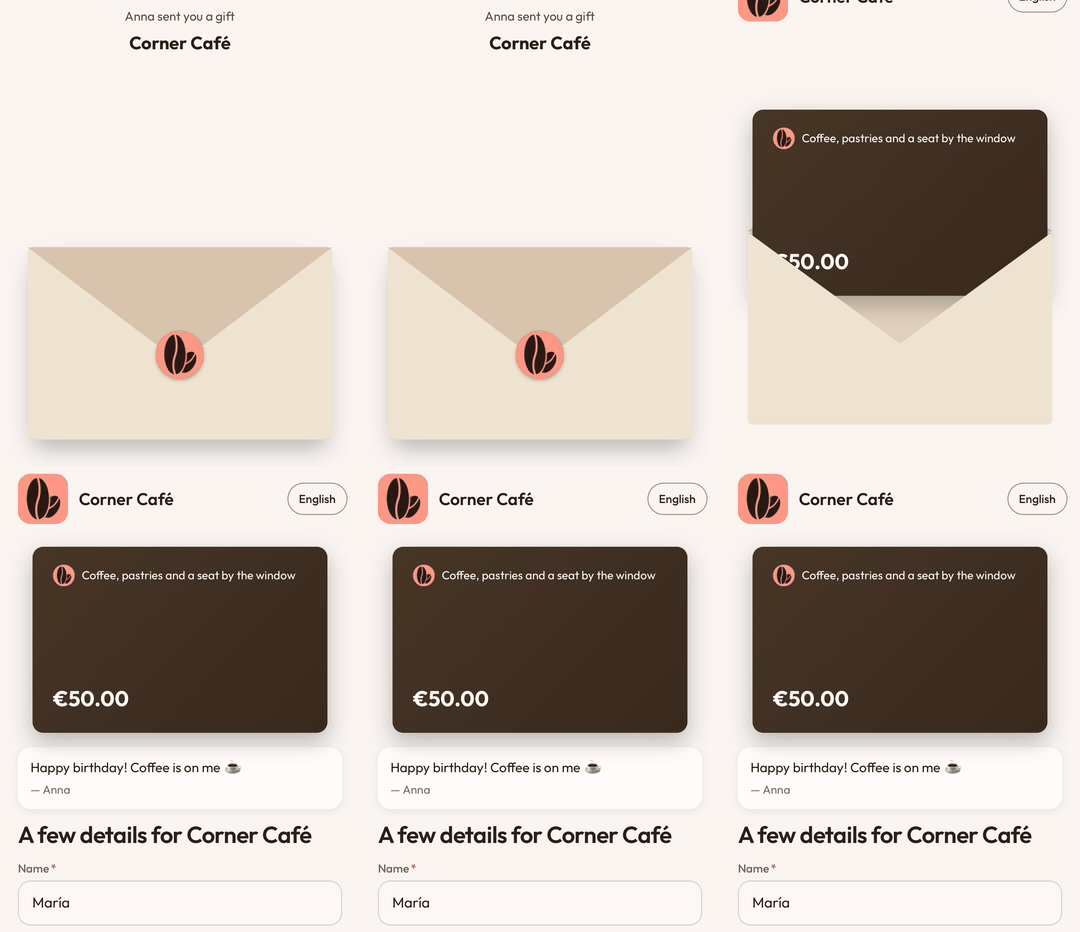
Step 4: The person opens an envelope with your logo
At the time the buyer picked, the person gets an email from your business. It keeps the surprise: no amount, no message, just an envelope to open. One tap breaks the seal, which is your logo, and the card slides out with the message. They type their name and email and add the card to Apple Wallet or Google Wallet. There's no app to download and no password to remember.
Step 5: They spend it at your counter
When they come in, your staff scan the card and take what they spend off the balance. A €50 card can be a €30 visit now and €20 next month. The scan shows 🎁 Gift from and the buyer's name, so your team can say "Oh, from Anna? Lovely." The buyer, meanwhile, gets an email when the gift is opened, which they like more than you'd think.
Can you sell gift cards at the counter too?
Yes, and you should, because plenty of people still decide at the till. When someone asks for a gift card, open Customers, click Invite customer, tick This is a gift and fill in the same details. Take the payment the way you always do, with cash or your card terminal. The gift arrives in the same envelope.
At the counter you can also gift a membership that doesn't renew, like three months at the gym or a month of unlimited coffee. Selling a gift card this way costs nothing extra.
When should you start for Christmas?
Earlier than you think. Gift card buying climbs through December and peaks in the last few days, when people run out of ideas. Here's a calm plan:
- Early November: set up your card and test it by buying one for yourself. If you sell other prepaid things, like prepaid coffee bundles, check those too.
- Mid-November: tell your regulars. One post, one line at the till: "We do gift cards now, and they arrive by email."
- Early December: add the QR code to your receipts and the table or counter.
- December 20 to 24: remind people that a digital gift card still arrives on time. This is where it beats anything in a shop window: the last-minute buyer pays at 23:00 on the 23rd and it lands on Christmas morning.
Then January comes, and people tighten their belts. In US retail data, same-store sales drop about 4.5% in January. The gift cards you sold in December walk in just when you need them.
What does it cost?
Gift cards are included in every Passtastic plan, and you can start with the 14-day free trial, no card needed. When a gift card sells online, we take 0.99% and Stripe takes its processing fee; the rest goes to your bank. On a €50 gift card, our part is €0.50. To sell online you connect a Stripe account, which you create inside Passtastic right after you publish the card. Gift cards sold at your counter need no Stripe account and cost nothing extra.
Online checkout works in Europe: the EU, the UK, Switzerland, Norway, Liechtenstein and Gibraltar. Anywhere else, sell them at your counter and the gift still arrives in its envelope. See pricing for the plans.
One limit to keep in mind: a gift card brings someone to your door once. Whether they come back depends on what they find there. If you want the second visit too, pair it with a loyalty card, which works well for salons, cafés and shops alike.
Ready before the Christmas rush: set up your gift card in a few minutes.
Start selling gift cardsSet up your first gift card today and test it with a gift to yourself.