
Build Your Own Loyalty App — or Use Wallet Cards?
You've got enough locations to justify your own loyalty app. Before you scope it: the build is the easy half. Getting customers to install it is the half that fails.


If you're big enough to be scoping your own loyalty app, the build isn't your risk — the install is. A custom app is months of work, a real budget, and a team member who owns it forever. Then you have to convince every customer to download it. A wallet card carries your brand into the same phone, in one tap, with nothing to build. Here's how the two actually compare.
What does loyalty app development actually involve?
More than the quote you'll get for it. A loyalty app is scoping, design, then two builds — iOS and Android — plus a back office to run campaigns from. Then App Store and Play review, which you don't control and can't schedule around a launch date.
The part that surprises people is what happens after launch. An app is never finished. Every OS release, every new device size, every security patch is your problem now. Someone on your team owns that queue permanently, or you keep an agency on retainer. That's not a project cost, it's a standing line in the budget.
None of that is an argument against building. Plenty of brands should. It's an argument for knowing what you're signing up for before the first invoice.

Will customers actually install a brand's app?
This is where the business case usually breaks. Fewer than one in three people would download a loyalty app at all. And of the apps that do get installed, 96% are deleted within a month.
Scale makes this harder, not easier. Your customers already have a folder of retail apps they never open. You're not asking them to try something new — you're asking them to give one more brand a permanent slot on a phone that's already full. A national chain with daily order-ahead can win that argument. A brand people visit twice a month generally can't.
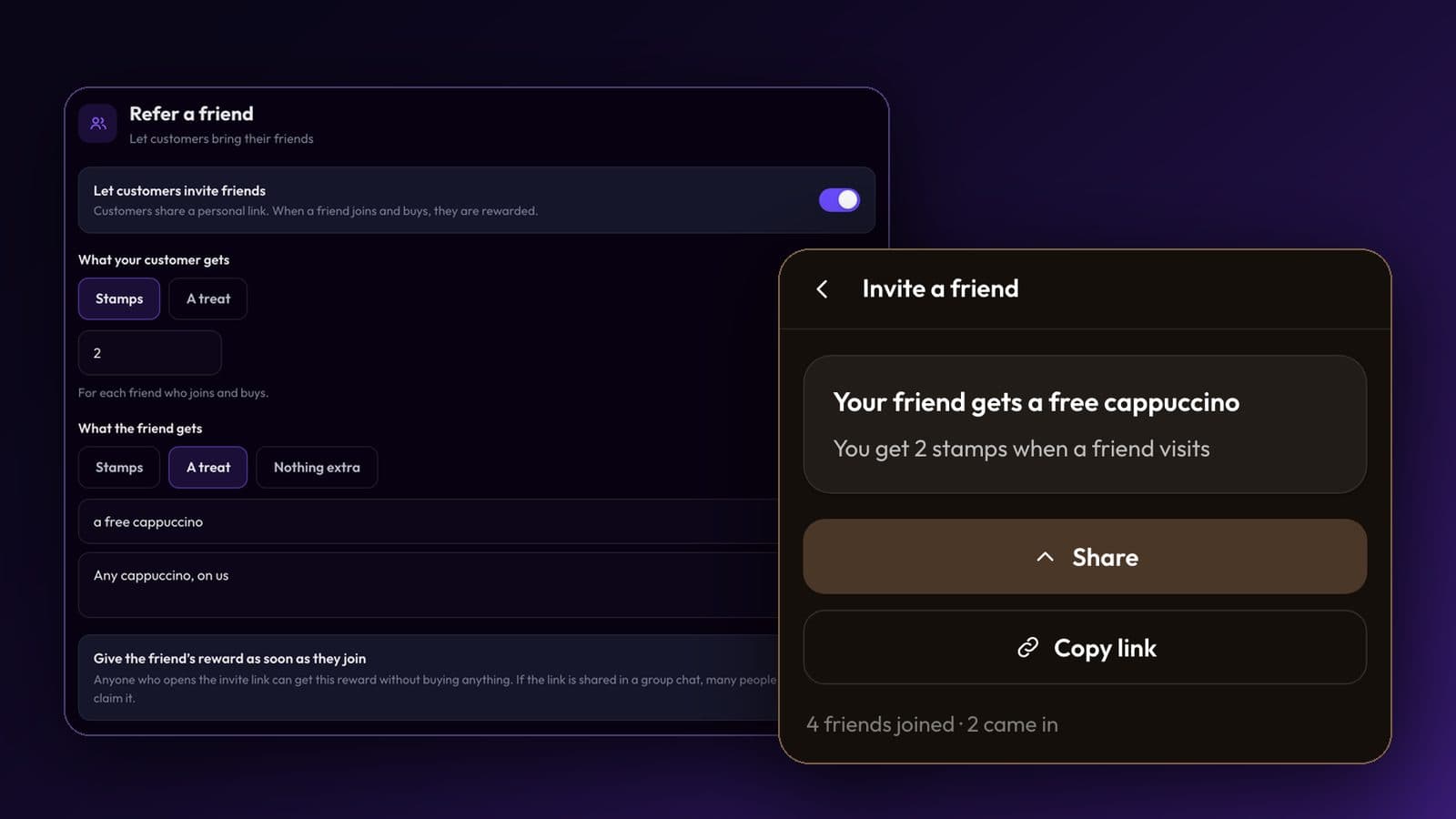
A wallet card sidesteps the question. It goes straight into Apple Wallet or Google Wallet — the app already on every phone — with one tap. No download, no account, no password. It sits next to their bank cards, so it's in front of them every time they pay. People can remove it, of course — they just rarely bother, because unlike an app it isn't taking up space or asking for anything. That's why eight out of ten people use a loyalty card when it lives on their phone.
But we want it to be our brand, not someone else's
Fair — and this is the objection worth taking seriously, because "white label loyalty app" is usually shorthand for "we don't want to look like we rented this."
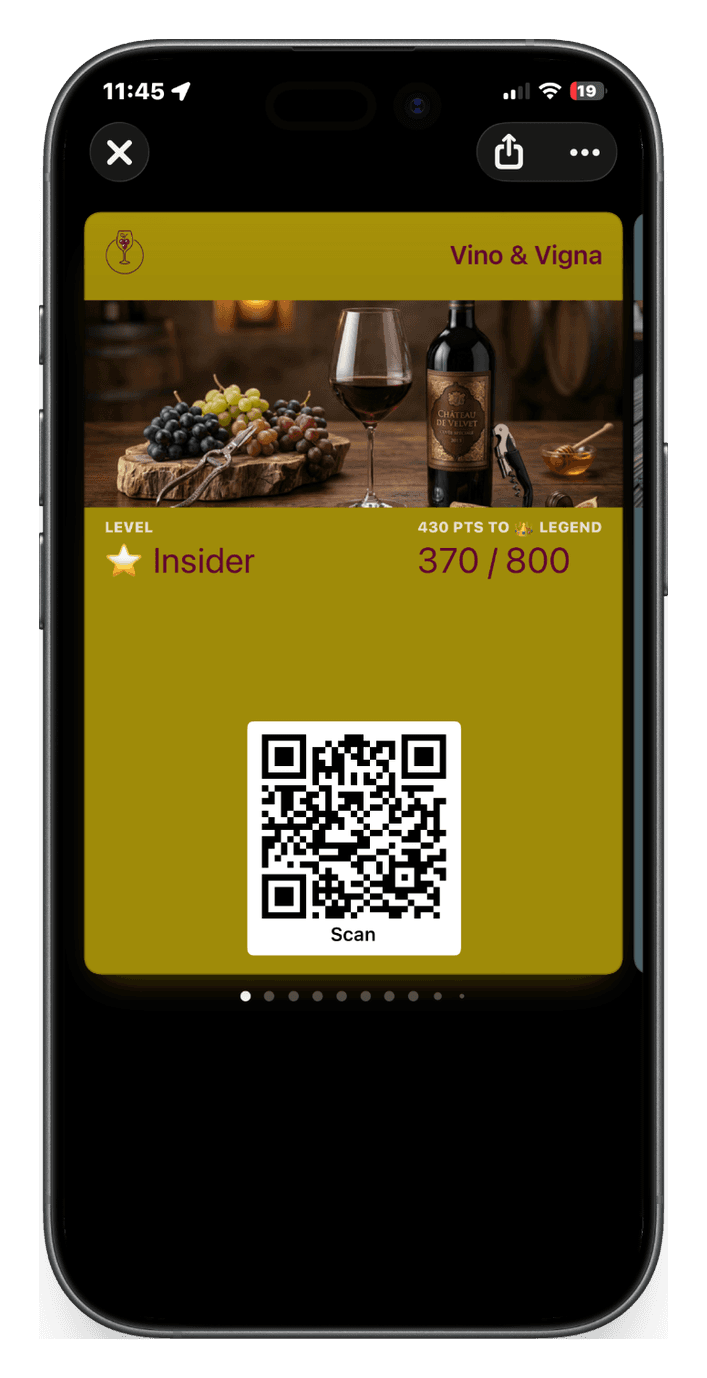
You don't have to. The card carries your exact brand colour, your logo and your cover image. So does the sign-up page the customer lands on — there's no Passtastic logo on either. Notifications go out under your name, not a platform's. You name the programme whatever you want.
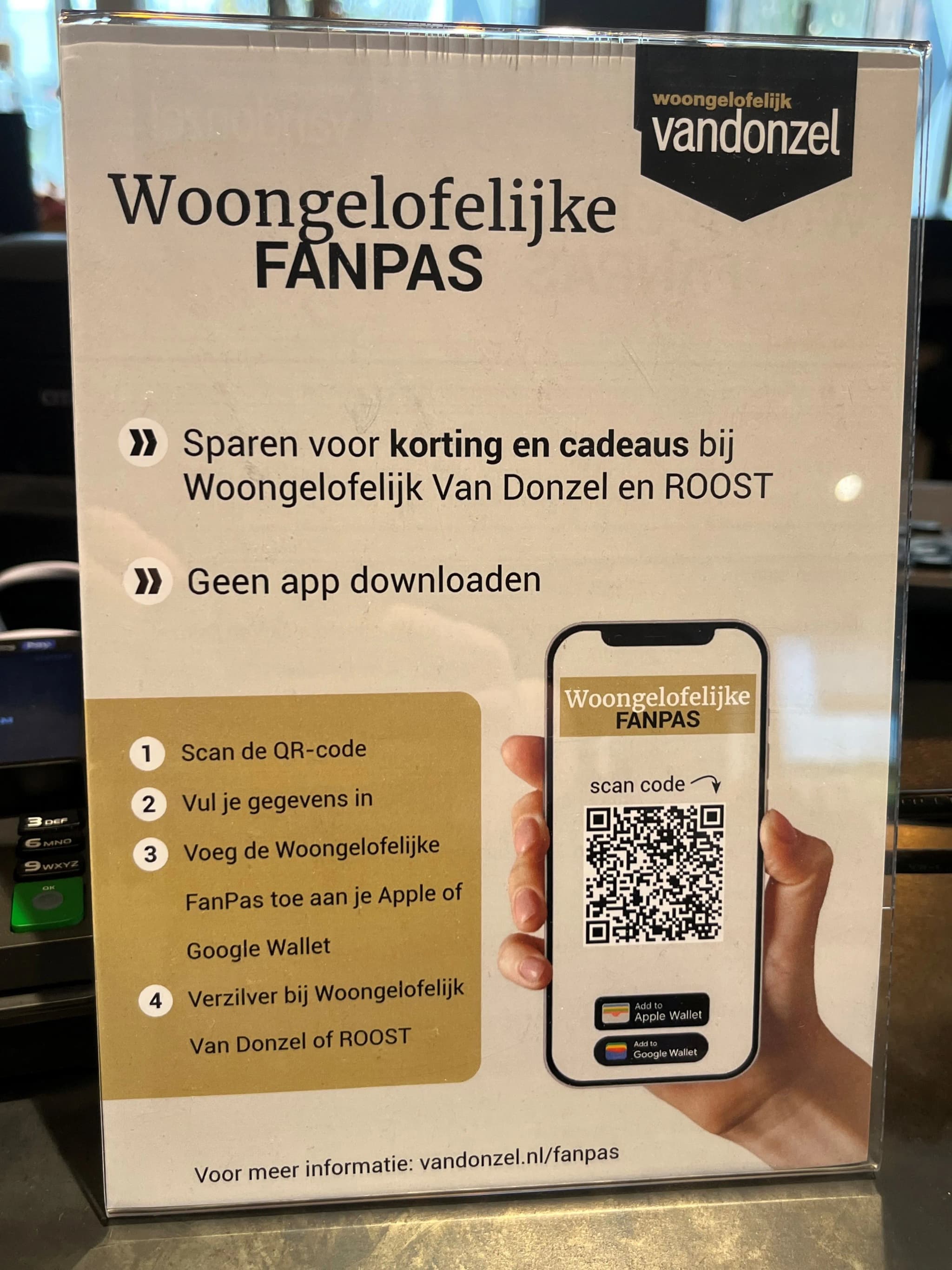
One customer of ours, a Dutch furniture retailer, rebranded the whole thing as their own FanPas — their name, their slogan, their colours. Customers know it as the store's card, because that's what it is.
You guys ticked all of the boxes that we needed.

The wallet is the container, not the brand. Compare where each option puts your logo: an app puts it behind an install prompt most people decline. A wallet card puts it next to their bank cards, on a screen they open several times a day.
What you give up with a wallet card
It isn't an app, and it can't pretend to be one. Anything that isn't loyalty — ordering, bookings, a catalogue — a card won't do, and no amount of clever design changes that. If your roadmap genuinely needs those things, you need an app, and no card is going to substitute for it.
Your own app vs a wallet card
| Your own app | Wallet card | |
|---|---|---|
| Time to launch | Months — design, two platforms, store review | Weeks — approvals and a rollout, not a build |
| What you're buying | A project, then a maintenance commitment | A subscription |
| Ongoing | Permanent — OS updates, devices, security | None on your side |
| Customer setup | Download, account, password | One tap, no account |
| Stays on the phone | Most are deleted within a month | Rarely removed — takes up no space |
| Brand control | Full — it's yours | Your colour, logo, name, notifications |
| Reaching customers | Push, if they didn't delete it | Push from the card itself, or text (SMS) |
| At the till | You build the integration | Syncs from your POS, reporting per site |
| Best for | Brands where the app does more than loyalty | Brands that want loyalty running now |
Will it work with our POS?
Usually the first technical question, and a fair one — at a dozen sites, anything manual multiplies by twelve.
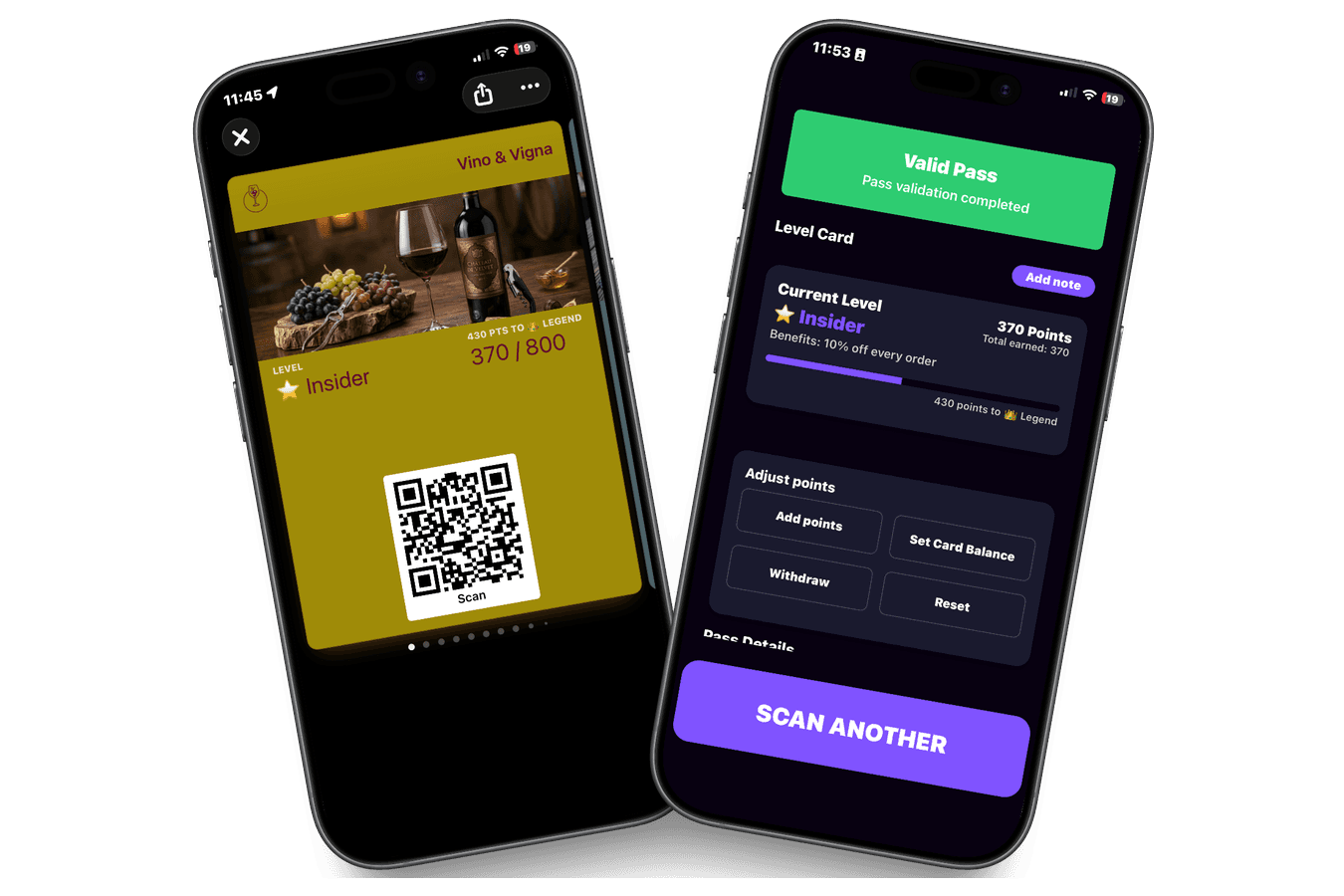
It connects to the register, and that changes the whole operating model. With Square, you link the account once and earning becomes automatic: staff attach the customer to the sale as they already do, and the stamps or points land on that customer's card. Nobody picks up a scanner, so there's no device to hand over at shift change and no extra step to train in. The one time a scan happens is redemption — a single check that the reward is genuine and not a reused screenshot — and that's a control you'd want anyway.
Lightspeed is live too, connecting the same way. Zapier and Make connect the programme to 5,000-plus tools, so sign-ups can flow into your CRM or email platform without anyone exporting a file, and on the larger plans there's an API and webhooks for a custom integration into whatever you already run.
Every setup is different, so this is worth a conversation rather than a guess — and the integrations page covers what connects today.
Does it work across all our locations?
Yes. Reporting filters by site, so you can see which shops are signing customers up and which aren't, and every user on the account has a role — a shop manager and a head-office analyst don't see the same things. Sites that aren't on an integrated POS can run a scanner on an ordinary phone instead; it's the same programme either way.
That's the part a build quietly adds to your scope, by the way. Multi-site reporting and per-location staff access aren't free features in a custom app; they're sprints. If you're running more than a couple of sites, loyalty across multiple locations is worth pricing separately before you commit to building.
And we'd lose push notifications?
No — and this is worth being precise about, because it's the most common reason brands think they need an app. A wallet pass sends push notifications too. Same mechanism, same lock screen, no app to install first. Add a text (SMS) on top and you have two direct channels. Three out of four of those messages get read, which is a number no email list matches.
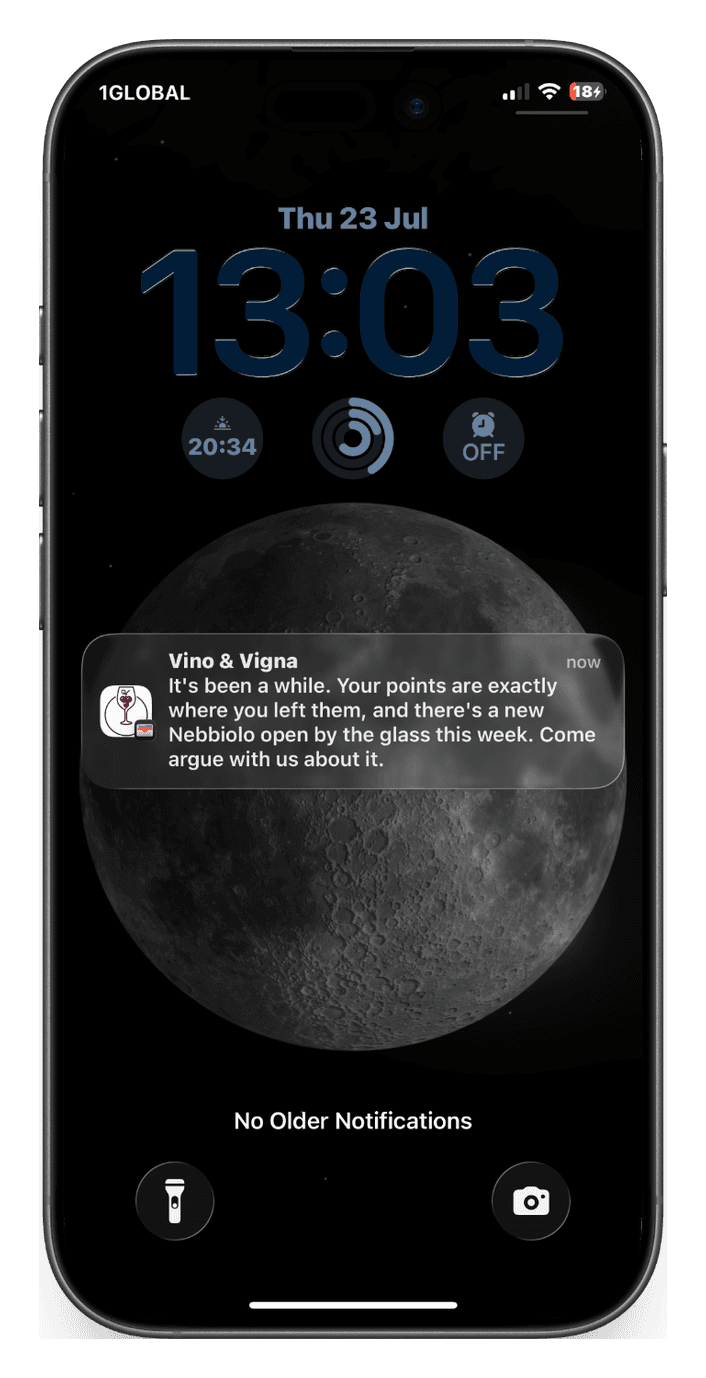
You can see how push notifications from a wallet pass work before you decide. If your app's core justification was "we need to reach customers directly," this covers it.
Who owns the data, and where does it sit?
You do. You're the data controller; we're the processor, acting on your instructions. Your customer list is yours, and we don't sell it or pass it on for anyone else's purposes.
On the practical detail your legal team will ask about: your customer data is hosted in the EU and encrypted in transit and at rest. Every user on your account has a role, so a shop manager and a head-office analyst don't see the same things. Consent is captured at sign-up with a timestamp, and SMS consent is a separate, explicit checkbox. A Data Processing Agreement is available on request.
What does rolling it out actually take?
Less than a build, but it isn't a switch you flip either — and at your size we wouldn't pretend otherwise. A single café signs up on a Tuesday and is live by Friday. A group with a dozen sites has approvals, a brand review, and staff across shifts, so this is a rollout: weeks, not months, and not a self-serve afternoon.
That's why we do it with you rather than handing over a login. We help finalise the programme itself — the levels, the rewards, how earning works — because those decisions go better with someone who's watched a few of these launch. We connect the POS. We make sure the team knows what changes at the till, which is usually a short session, because for most staff nothing changes at all.
You work directly with us, not a ticket queue. That matters more than it sounds when you're coordinating a launch across a dozen shops.
So which should we choose?
Two things settle it, and you can work both out on your own, before you sit down with an agency.
- Write down what the app would actually do, then split the list in two. In one column, everything a card already covers: stamps and points, tiers, rewards, sign-ups at the counter, knowing who your regulars are, messages straight to the lock screen. In the other, what only an app can do: ordering ahead, table or class bookings, delivery tracking, a browsable catalogue, a saved basket. If the second column comes out empty, you're paying app prices for a card's job. If it holds two or three real entries, the build has a case — and loyalty rides along inside it rather than being the reason for it.
- Put the quote beside what the alternative costs for a season. You have a figure from the agency. Put a second figure next to it: what it costs to run a wallet programme across every site for three months. If the cheaper option answers the same question, run that first and let it produce the data your business case is currently missing.
If you want a number before you decide, our ROI calculator projects what a programme would return for a business your size — seven questions, and it shows the maths. You can create a card and have a look around, too. Most people want to see the thing before they talk to anyone.
On cost, the short version: it's a subscription, and what it comes to depends on how many sites you're running. That's a five-minute conversation rather than a page of caveats — talk to us and we'll show you what it looks like for your group.
Either answer can be the right one. What matters is that your answer comes out of your two columns, and not out of the quote that happens to be sitting on your desk.
Put your brand in your customers' wallet — no build, no download.
Talk to us