
Christmas Party Booked for 12 and Only 7 Turn Up: What Can I Do?
A party books a table for 12, you prep for 12, and 7 walk in. How restaurants stop short Christmas parties and no-shows: terms, headcount checks and a record.

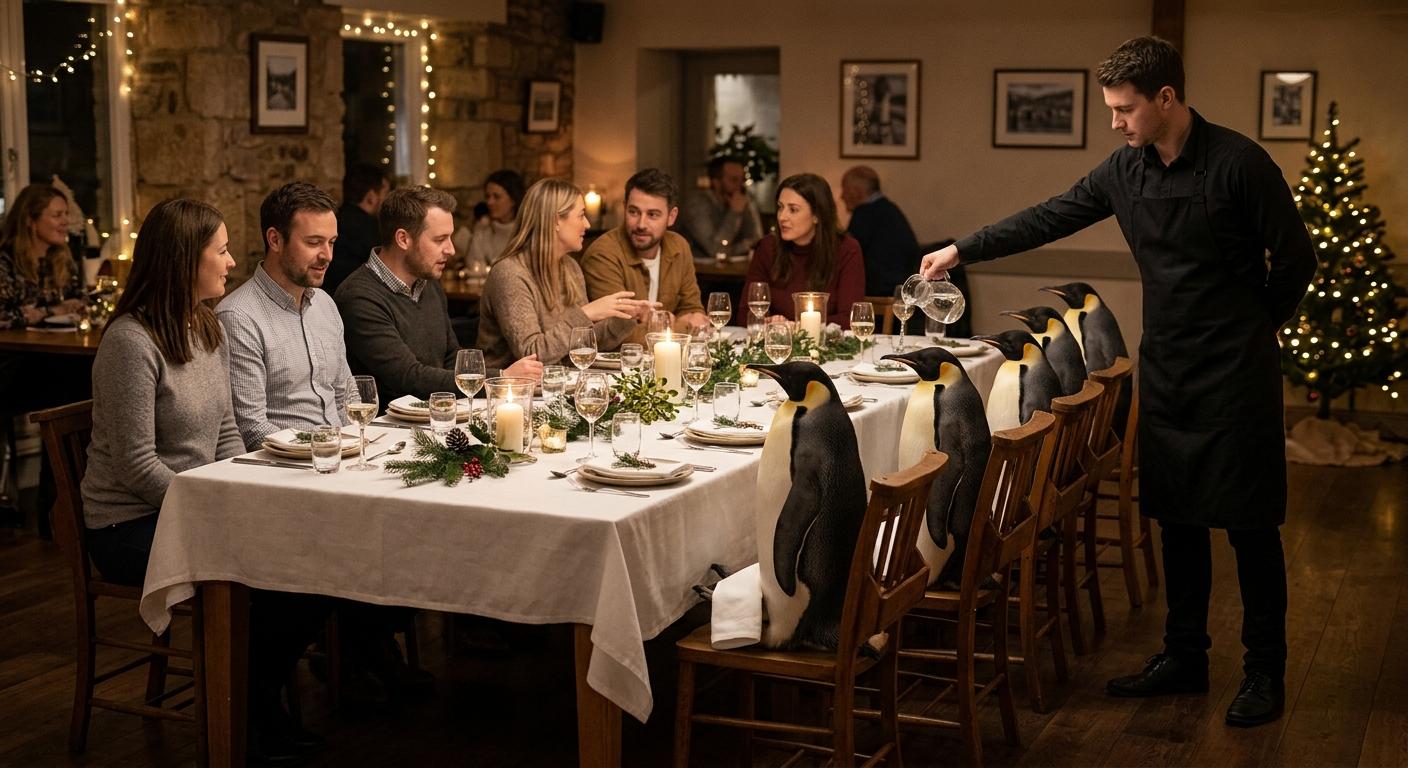
How many of your December party bookings will arrive with everyone on the list? Who decided the party was 12: the person who booked, or the 12 people who'll actually come? And when 5 chairs stay empty on a Friday in December, who pays for the food you prepped for them?
Set the terms when a party books, and confirm the headcount twice before the night. Ask one organiser for a final number 48 hours before, and charge for the number they confirm. For whole-room bookings and prepaid set-menu nights, take a deposit per head.
The rest of this guide shows how to do that without sounding strict, and how to turn the 7 who did come into regulars with a loyalty card guests add to their phone.
Why does a party of 12 turn into 7?
Big parties rarely vanish whole. What happens instead, in December, is that they shrink.
A 2026 study by a restaurant-marketing company looked at reservations at about 50 restaurants from January 2025 to August 2026. Overall, 3.7% of bookings were no-shows and another 15% were cancelled. For parties of 7 or more, the no-show rate was 1.8%, against 4.5% for tables of one or two (the 2026 study). The study counts tables, so it can't see a party that arrives five short. That's the December problem you're seeing.
Someone books for the whole team in October. By the second week of December, two have a cold, one has a school play, and two never really meant to come. Nobody tells you, because the person who booked doesn't know either.
So the fix is different from a normal no-show. You need one person who owns the number, a date when the number is final, and a reason for them to tell you the truth.
What does a short party really cost me?
More than the bill shows.
Take the Holly Tree, an invented 40-seat bistro. A party books for 12 on a $55 Christmas set menu.
| Booked | Turned up | |
|---|---|---|
| Guests | 12 | 7 |
| Set menu at $55 | $660 | $385 |
| Lost on one table | $275 |
And that $275 is only the menu. Add the food you bought and prepped for 12, a server you scheduled for a bigger table, and the couple you turned away at 7 p.m. because the long table was "full".
Now the same party with one rule: we charge for the number you confirm 48 hours before. The organiser confirms 10. Seven come. The bill is 10 × $55 = $550. You prepped for 10, not 12, and you could sell the two seats that dropped out early.
That's $165 more on the same night, with less wasted food.
How do I stop Christmas parties turning up short?
Work the booking in five steps, from the day it's made to the day after. If you take table bookings from your own link, check three things in your booking settings. Set the largest party that can book online, so bigger groups come in as requests you answer. Make the phone number required. And make sure each guest's no-show record is kept.
Before you start, look at your own numbers. Count last December's party bookings: how many people booked, and how many sat down. Note the nights and the size of the tables that came short. That tells you where the rules below are worth the effort.
Step 1: Set the terms when the party books
Tell the organiser when you accept the booking, in plain words, by phone or in your own message:
- the set menu and the price per head;
- the date the final number is due (48 hours before gives you time to adjust);
- that you charge for the confirmed number;
- how long you hold the table if they're late (15 minutes is a common grace period).
Big parties shouldn't book themselves into your diary without you. Make anything above, say, 8 guests a request you answer, so you can call the organiser and agree the terms first.
Step 2: Get one organiser's name and number
A booking for 12 needs one person who answers for the number. Ask for the organiser's mobile and email, and write it on the booking.
Treat new and returning organisers differently. Someone booking with you for the first time gets a quick call to agree the terms. A regular who has brought parties before and always paid for what they confirmed can just get the 7-day message.
Step 3: Ask for the headcount 7 days before
A week out, send the organiser a short message yourself, by text or email. Here's one you can copy:
Hi Sam, looking forward to your party on Friday 11th. You're booked for 12 at 7.30 p.m. on our Christmas menu. Could you check the number with your group and reply by Wednesday 9th? We'll charge for the number you confirm then. Any dietary needs, send them over too. Thanks! The Holly Tree
This message does most of the work. The organiser asks the group, and the two who were never coming say so. Keep the organiser's reply: it's their written agreement to the rule.
Step 4: Lock the number 48 hours before
Two days out, the number they give you is the number you charge. Update the booking, adjust the prep, and offer the freed seats to your waiting list or walk-ins.
Step 5: On the night, and the day after
Seat the party, and charge for the confirmed number as agreed. If some didn't come, a polite line on the bill is enough: "Confirmed for 10." If the organiser argues, show them their reply from Step 3. If a group argues anyway, ask for a deposit or a prepaid menu next time they book. Then send the organiser a thank-you the next day. If the whole party didn't come and didn't call, mark it as a no-show, so you see it next time they book.
Should I take a deposit for Christmas party bookings?
When someone books the whole restaurant or a private room, for very large parties, and for prepaid set-menu nights, yes. For an ordinary party of 8 or 10, the confirmed-number rule above usually does the job.
Here's why. The 2026 study found that parties of 7 or more were the most reliable bookings of all, and it warns that deposits aimed at big groups put off the very guests most likely to come. It reserves card holds for whole-restaurant holiday bookings and large events. That study counts whole tables that never arrive. It doesn't measure a party that arrives five short, and that's the gap a charge on the confirmed number covers, with no money taken up front.
A deposit works because it moves the cost to the person who can prevent it. One booking-software guide suggests $10 to $25 a head, taken off the bill and refunded if the party cancels at least 24 hours ahead (a 2026 restaurant booking guide). The same guide describes the other option: hold a card at booking and charge a per-head fee, often $25 to $50, only if the guests don't come. A fee also makes groups tell you sooner when their number drops (one reservation-software guide).
Not every booking system takes deposits, and Passtastic's doesn't. Then you take the deposit yourself when the organiser confirms, by bank transfer or on your card terminal, and note it on the booking.
The catch: a deposit can put people off, and you have to handle refunds and arguments. So keep it for the bookings where empty chairs really hurt:
- the whole restaurant or a private room;
- very large parties, say 20 or more;
- set-menu nights where you buy and prep per head;
- the two Fridays and Saturdays before Christmas, if you know they fill.
For set-menu nights and events, the cleanest version is to sell them prepaid, like a ticket.
How do I tell guests about a no-show policy without sounding rude?
Explain the why in one sentence, and keep the tone warm.
Most guests see a booking as something they can quietly drop. A line like "We buy and prep your Christmas menu for the number you confirm, so we charge for that number" turns your rule into something they understand.
Say it three times: when you accept the booking, in the 7-day headcount message, and when you lock the number 48 hours before. Then nobody hears about it for the first time on the night.
Do reminders actually reduce no-shows?
Yes, as long as cancelling is easy. A reminder catches people who forgot. The cancel link catches people who already know they won't come but couldn't be bothered to call.
Send one the day before with a one-tap way to cancel or change. A guest who cancels at 6 p.m. the day before leaves you time to fill that table. A no-show leaves you an empty one.
In that 2026 study, bookings made online were no-shows a little more often than bookings made by phone (3.9% against 3.0%). So the reminder matters most for the tables people book from a link, at midnight, in a few taps.
For big parties, send the organiser the 7-day headcount message as well as the reminder. That message is how you learn the real number in time.
Should I overbook in December to cover the gaps?
Carefully, and only with small tables.
Overbooking only works when you know your own no-show rate for that night and that kind of table. In the 2026 study, no-shows clustered on small tables and on Sundays and Mondays. A couple of extra tables for two on a busy night can make sense. Overbooking around a party of 12 is a gamble: if they all come, you have nowhere to put the extras.
A better buffer is a short waiting list. Keep the names and numbers of people you turned away, and call them when the 48-hour headcount frees seats.
What should I do about people who keep not showing up?
Keep a record, and act on it the second time.
Most no-shows have a reason, and one can be a real emergency, so a friendly "we missed you, hope everything's OK" is the right first move. Two or three in a few months is a pattern. Ask that guest for a deposit, or take their bookings by phone only.
Be careful with a blacklist. The 2026 study argues that blacklists and deposits backfire when they hit the wrong guests, and that the real fix is knowing who is booking before they arrive. A phone-only rule for repeat no-shows keeps the door open: you talk to them, and they can still eat with you.
You can only do this if you can see it. A paper diary forgets. A booking system that ties each booking to the guest's history shows "2 no-shows of 9 bookings" before you accept the next one.
And reward the guests who do show up. A stamp on their loyalty card for every visit, or a note from the manager when a regular's party arrives in full, tells them you noticed. They're your best customers in January, when the parties stop.
How do I get the 7 who came to come back in January?
Christmas parties bring people who've never eaten with you. Seven new faces at one table means seven chances at a January regular.
Give them a reason to join your loyalty card before they leave: a QR code on the table or on the bill, and one line from the server. The card sits in their phone's wallet. In January, when tables are slow, you can send everyone on your card a message with a reason to come back. Here's what a wallet notification can say.
Two more ideas for the season: sell gift cards before Christmas, so December guests buy January visits for someone else, and look at how to win back customers who stopped coming once the rush is over.
One limit: none of this fixes a bad night. If the party waits 40 minutes for the main course, no card or message brings them back.
Every party booking brings new faces: give them a loyalty card for their phone and see them again in January.
Create your loyalty cardPasstastic's plan at $19 a month includes table bookings on your own link, with each guest's no-show history, big parties as requests you approve, and reminders with a cancel link; it doesn't take deposits, so take those the way you take payments now.