

How much does Booksy really cost?
Boost can sit on top of the subscription. We worked out what a three-person salon pays Booksy in a year, Boost included, and when that commission really pays off.

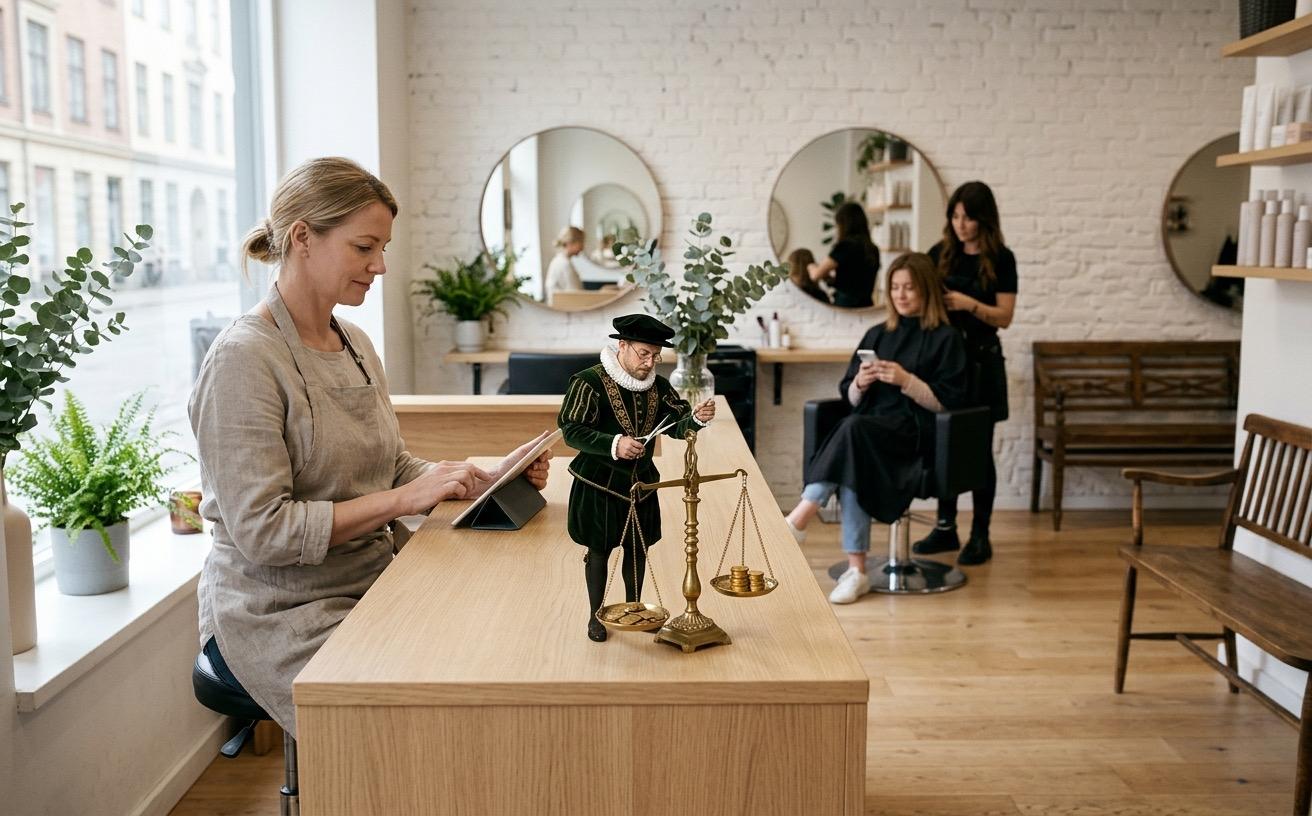
The first Monday of the month. Kasia owns a salon with three chairs (the salon is made up, but you've probably walked past one like it). She opens her Booksy invoice: 215 zł for the subscription and 540 zł in Boost commission. She scrolls through the eight new clients from October. She only remembers one face. She's the only one who came back.
Booksy costs 145 zł net a month for the first person in the calendar and 35 zł net for each extra person, plus VAT. Boost takes 45% net of the first visit of every new client from the marketplace (up to 250 zł per client), and their later visits carry no commission. A salon with three people and eight Boost clients a month, with a 150 zł first visit, pays about 9,060 zł net a year, and Boost only pays off when new clients come back.
This post works everything out in złoty, using prices from Booksy's official price list, checked on November 11, 2026. Then it shows where Boost earns its keep and where you're paying for a client who'll never return. You can invite your regulars through your own link, and your own loyalty card on your client's phone reminds them about their next visit with no middleman.
How much does Booksy cost per month?
The Booksy Biz subscription is 145 zł net a month for the first person in the calendar. Each extra person on your team is 35 zł net a month. From the tenth person on, Booksy stops charging for extra accounts. VAT at 23% is added to every amount.
What do you get for the subscription? According to Booksy's price list: unlimited online bookings, automatic confirmations and appointment reminders, marketing campaigns, integration with Google, Facebook and Instagram, reports and stats, a waiting list, no-show protection features, and passes and packages. Booksy says all of this is included in the fixed subscription price, and Boost is the extra service outside it.
There's no free plan. There's a 7-day trial, and after that you pay the monthly subscription.
| What | Price | When you pay |
|---|---|---|
| Subscription, first person | 145 zł net / month | every month |
| Each extra person (up to the 9th) | 35 zł net / month | every month |
| Boost | 45% net of the first visit, max 250 zł net | once per new client, after the visit |
| Booksy Pay (the client pays in the Booksy app) | free until June 30, 2027 | — |
| Mobile payments and prepayments | 1.89% + 0.49 zł gross | on every transaction |
| Tap to Pay (contactless payment on your phone, no terminal) | 1.49% | on every transaction |
| Booksy gift card | 3% gross | on every sale |
| Marketing SMS above 100 a month | 0.10 zł net per SMS | when you go over the limit |
Prices from biz.booksy.com/pl-pl/cennik, checked on November 11, 2026. Appointment reminders and system SMS are free.
What does that come to gross? For one person, 145 zł net is 178.35 zł gross a month. For three people (145 + 2 × 35), it's 215 zł net, or 264.45 zł gross. For six people (145 + 5 × 35), it's 320 zł net, or 393.60 zł gross. If you're VAT-registered, you can usually deduct that VAT. If you're VAT-exempt, you pay the gross amounts.
One thing worth knowing right away: Booksy takes no commission for clients who book through your own profile link, a QR code, the "Zarezerwuj teraz" (Book now) button on Instagram or Facebook, or "Zarezerwuj z Google" (Reserve with Google). That's true even for a brand-new client. And if you'd also like a booking page outside Booksy, bookings through your own link carry no commission, and the client only sees your salon there.
How much do you really pay for Boost?
Boost is an optional service that shows your salon to new clients in the Booksy marketplace. That's where people nearby search for things like "fryzjer w pobliżu" (hairdresser near me). If Boost is off, Booksy charges no commission for new clients.
When it's on, you pay 45% net of the value of all services in the first, completed visit of a new Boost client. Once, after the visit. The commission is worked out on the full service price, with nothing taken off for materials or your time. Booksy gives its own example: a 200 zł service means a commission of 110.70 zł gross (90 zł plus 23% VAT). The commission is capped at 250 zł net per client, so for pricier treatments, from about 556 zł up, you pay the same flat amount.
That client's later visits are all yours. Booksy takes no commission for clients who already come to you.
On the Boost page, Booksy also mentions a 35% net rate as part of a special offer (available through the sales team). An older Booksy article from 2023 tied 35% to a 12-month contract and 45% to an open-ended one. If you're paying 45%, ask about this offer before you sign anything long-term.
How much does Booksy cost over a whole year?
Let's work it out for Kasia's salon. Three people in the calendar, 8 new Boost clients a month on average, and a 150 zł first visit (a cut and blow-dry or a gel manicure).
- Subscription: 145 + 2 × 35 = 215 zł net a month, or 2,580 zł net a year.
- Boost: 45% of 150 zł is 67.50 zł net for each new client. 8 × 67.50 = 540 zł net a month, or 6,480 zł net a year.
- Total: 9,060 zł net a year, about 11,144 zł gross if you don't deduct VAT.
If you take mobile payments or Tap to Pay, there's also a fee on every transaction (rates in the table above).
In this example, Boost is the biggest line on your Booksy bill: 6,480 zł out of 9,060 zł, two and a half times the subscription.
When does Boost pay off, and when doesn't it?
Boost is worth the money when you've got empty slots in your calendar and the new client sticks around. Then 67.50 zł is a one-off price for winning someone who'll keep paying you for years.
Look at how the cost per visit changes with a 150 zł first visit:
| How many times the client came | Total Boost commission | Commission per visit |
|---|---|---|
| Once | 67.50 zł net | 67.50 zł (45% of the visit) |
| 3 times | 67.50 zł net | 22.50 zł (15%) |
| 5 times | 67.50 zł net | 13.50 zł (9%) |
A client who comes five times costs you 13.50 zł a visit. A client who comes once takes almost half the price of the service. The commission is the same either way. The difference is what happens after the first visit.
Boost doesn't pay off when your calendar is full anyway. Then you're paying commission for someone who takes a slot you'd have filled regardless. It also doesn't pay off for services few people come back for, like one-off makeup for a special occasion. When you're that busy, your regulars can book on your own booking page instead, with no commission (more on that below).
It's the same math as with apps that take a commission on your customers in food service: the platform brings the first visit, and your job is to make the next ones happen without it.
What won't Booksy do for you?
Booksy can bring you a new client and will remind them about their appointment. It won't make them come back for a second, fifth or tenth visit, though. Every client who doesn't come back is a slot in your calendar you have to fill again, often with another commission.
There's something else, too. The Booksy marketplace is a search engine: local clients type things like "fryzjer w pobliżu" or "stylistka paznokci" (nail stylist) and book appointments. Salons with Boost are labeled "Promowane" (Promoted) there and are easier to spot. So your client is booking somewhere that also shows them other salons nearby.
What you can do without leaving Booksy:
- 1At the first visit, ask your Boost client to book the next one through your Booksy profile link. Their later visits carry no commission anyway, so this step builds a habit: the client books straight with you and doesn't have to look for you in a search engine that also shows them other salons.
- 2Give them a reason to come back. A loyalty card gives them a stamp for every visit and lives on the phone they always have with them, so it doesn't get lost like a paper one. On the tenth visit, for example, a reward they've earned is waiting for them. You choose how many visits it takes and what the reward is.
- 3Get in touch before they forget you. A short message a few weeks after the visit reminds them of you before they book somewhere else. There's more on this in the post on how to win back a client who stopped coming.
- 4Sign clients up for the card at the mirror. The best moment is when the client sees the result and is happy with it. Here are a few ways to get clients to sign up for your card without handing out discounts.
A loyalty card won't fix a bad haircut or a mix-up in your calendar. It only works when the client was already happy and just needed a reminder and a reason to book with you again.

It's a good program if you don't have a loyalty system integrated into your booking system. I absolutely would tell them to use this as an option just because of the digital wallet and not having to use a punch card.

Booksy or your own booking page for your regulars?
If Boost brings you clients who stay, keep it. It can keep filling empty slots with new people.
You can still move your regulars somewhere they only see your salon. With your own commission-free booking page and a loyalty card in their phone wallet, the client books with you, collects stamps with you and gets reminders from you.
This is what the loyalty card looks like in Apple Wallet: your logo, your colours and your photo. There are no other salons from the area next to it, just your card, your client's stamps and a button to book the next visit.
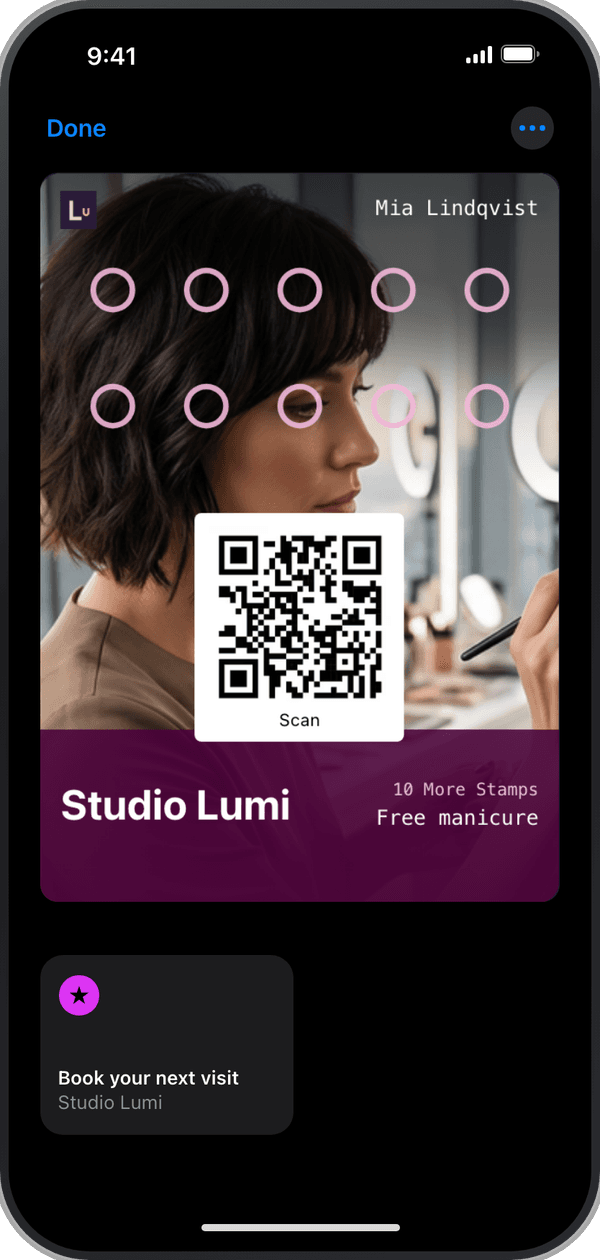
You can also tell your clients about anything new straight from you, with no one in between: a new treatment, Sunday opening hours, double stamps this weekend. The message arrives as a notification on the card in their phone (free), by email or by text message (texts are paid with prepaid credits). Clients who agreed to it can get your offers on WhatsApp from your own number. That comes with the "Bring customers back" pack, and Meta charges for each message.
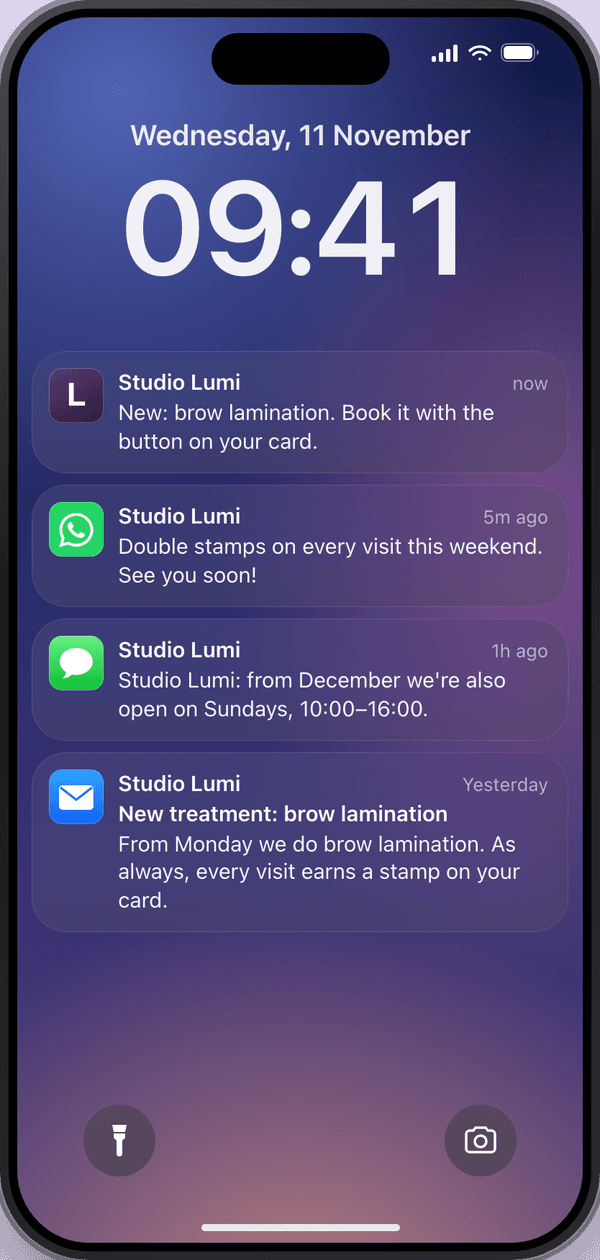
And this is your own booking page. The client picks a service, a person and a time, and sees only your salon: no list of other places nearby, and no commission on the visit.
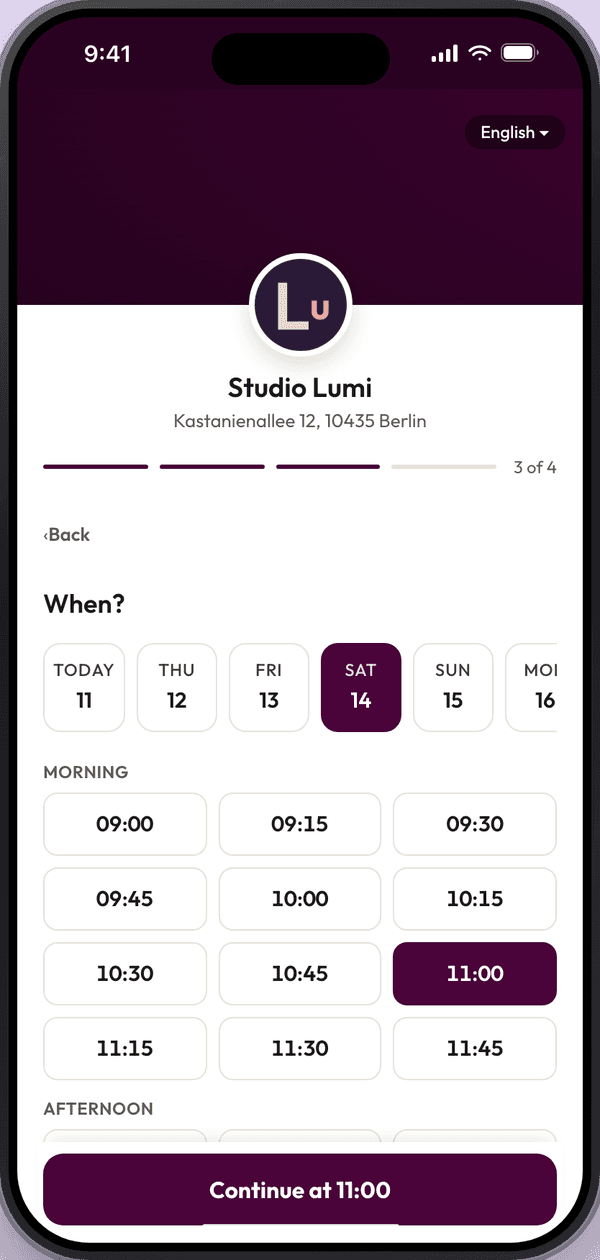
How to move your regulars in practice:
- 1Set up a booking page and a loyalty card. You add your services and assign the team members who do them.
- 2Put the link where your clients already are: on Instagram, on your Google profile and on a QR code poster by the mirror.
- 3Mention it when they pay. "You can book your next visit here, and you can collect stamps on your phone." The client doesn't install anything: the booking page opens in the browser, and the card goes into Apple Wallet or Google Wallet.
It's an extra cost on top of Booksy, since you keep Booksy for new clients. The math is simple: the plan, at $19 net a month, costs less than a single 150 zł visit. So it pays for itself if the card gets just one regular a month to come in one more time than they would have without it.
In Passtastic, it's one plan at $19 net a month: bookings from your own link (no booking fees and no commission), a loyalty card in Apple Wallet and Google Wallet, and appointment reminders by email and wallet notification. You can send a message to all your cardholders manually. Automatic messages, like birthday wishes or nudges to clients who haven't been in for a while, come with the "Bring customers back" pack at $9 net a month per location. You can start free with a 14-day trial, no credit card needed.
Keep Boost for new clients if it works. Move your regulars to your own booking page and a loyalty card on their phone. Start free with a 14-day trial, no credit card needed.
Create your loyalty cardAlina Petrenko, Co-founder. Hi, I'm Alina, co-founder of Passtastic. My goal is simple: a loyalty program should take care of itself. So I work on the things that make that possible, like quick setup, automatic messages that bring customers back, and connections to the systems businesses already use, so points add up with every sale. I learn the most from talking to café, bar and bakery owners, and that's what I write about here.