
Digital Loyalty Cards in the UK: A Guide for Independent Businesses
What a digital loyalty card scheme looks like for a UK café, pub or shop: how customers join, what UK GDPR asks of you, which rewards work on the high street, and what it costs to run.

A digital loyalty card scheme puts your stamp card in your customer's Apple Wallet or Google Wallet instead of their purse. For an independent café, pub, bakery or shop in the UK, that means no printing, no lost cards and no app for anyone to download. This guide covers what a UK owner actually needs to decide: how customers join, what the data rules ask of you, which rewards work, and what it costs.
What is a digital loyalty card, and how is it different from a loyalty app?
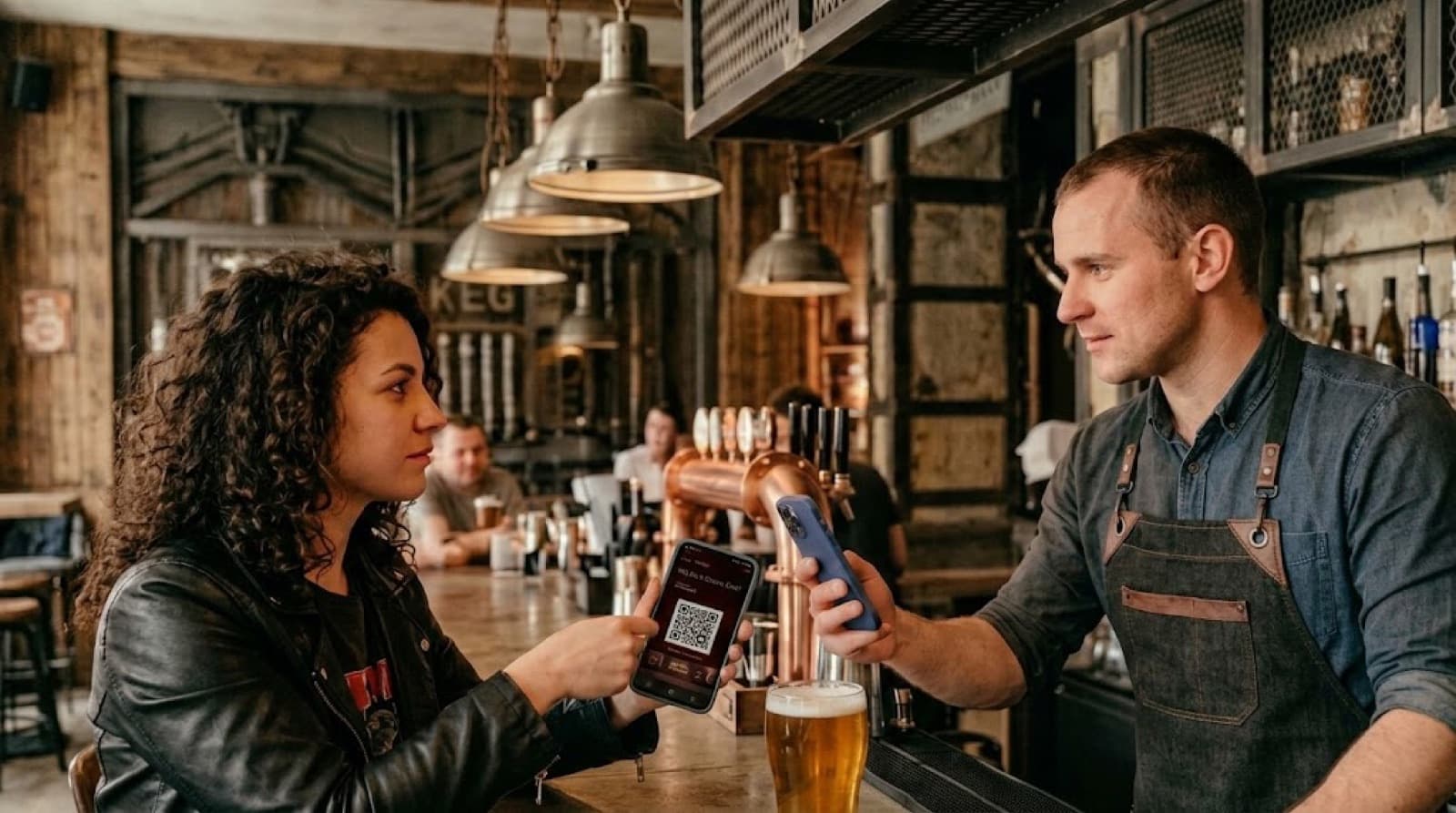
A digital loyalty card is a card that lives in the wallet app already on every iPhone and Android phone. It sits next to train tickets and boarding passes. The customer scans a QR code at your counter, taps "Add", and they're in. Each visit, your staff scan the card and the new stamp or points appear straight away.
A loyalty app is different. It's a separate app the customer has to find in the App Store, download, sign up for and keep. That works for big chains with a reason to open the app every day. For a single café or barber, most people won't bother, and the ones who do often delete it later.
Customers still get the experience of an app with a wallet card. They can see their progress, get a notification on their lock screen when a reward is ready, and open your own page with their rewards and your links. There's just nothing to download first. If you want to try one on your own phone, you can set up a digital loyalty card and add it to your wallet in a few minutes.
Will UK customers actually use it?
Mostly, yes, and for a simple reason: your customers already use their phone wallet. Contactless phone payments are an everyday habit in the UK, and many people already carry rail tickets, boarding passes and gig tickets the same way. A loyalty card in the same place doesn't ask them to learn anything new.
Two honest caveats are worth planning for:
- Not every regular has a smartphone. Some of your most loyal customers may be the least keen on technology. Keep a small stack of paper cards for them for a while. Nobody should feel pushed out of your scheme.
- A digital card won't sell itself. The single biggest factor in sign-ups is your staff mentioning it. One friendly line at the till ("Do you want our loyalty card? It goes straight into your phone") will do more than any poster.
What do UK GDPR and the ICO rules mean for a loyalty scheme?
A loyalty scheme collects personal data, so UK GDPR applies. The ICO (the Information Commissioner's Office) is the regulator. For a small business running a simple scheme, the practical rules are short:
- Ask only for what you use. If you never send birthday treats, don't ask for a birthday. A name and an email address are often enough.
- Say what you'll do with it. A line on the sign-up page and a link to your privacy notice covers most of it.
- Get consent before marketing texts or emails. The UK's electronic marketing rules (PECR) say you need people's permission to send them marketing by text or email. There's a "soft opt-in" for existing customers in some cases, but the simplest route is a tick box at sign-up, plus an easy way to stop messages later.
Passtastic's sign-up form can include a consent tick box for text messages, and your customer list shows who has agreed. That doesn't replace your own privacy notice. If you're unsure about anything, the ICO's guidance for small businesses is clear and free. This section is a summary, not legal advice.
Which rewards work for a UK high street business?
The best reward is close enough to picture and cheap enough for you to give away happily. A few patterns that suit typical independents:
| Business | Card type | A reward that works |
|---|---|---|
| Café or coffee van | Stamp card | Ninth coffee free (a drink that costs you well under £1 to make) |
| Barber or salon | Stamp card | Sixth cut half price, or a free product |
| Bakery | Stamp card | A free loaf or pastry after eight visits |
| Pub | Points | Points per £ spent, swapped for a pint or a bar snack |
| Gift shop or deli | Points | Points per £ spent, with a £5 voucher at a set total |
If you sell one main thing at a similar price, stamps are simpler. If baskets vary a lot, points are fairer. If you go with stamps, here's how digital stamp cards work in more detail.
How do I set up a digital loyalty card scheme?
You don't need a developer, a new till or a contract. The setup takes an afternoon at most.
Step 1: Choose your reward and card type
Pick stamps or points using the table above. Write the reward in plain words, like "Your 9th coffee is on us."
Step 2: Design the card
Add your logo and colours and set the number of stamps. Your card should look like your shop, not like a generic voucher.
Step 3: Put the QR code where people wait
Print the sign-up QR code for the counter, the tables and the window. Add it to your receipts and your Instagram bio too. Customers scan it and the card goes straight into their phone wallet.
Step 4: Show your staff how to scan
Staff use a scanner app on a phone or tablet to add stamps and redeem rewards. A five-minute run-through before opening is usually enough. Then ask them to mention the card to every customer for the first month.
It works alongside whatever till you have. If you take payments with Square or Lightspeed, you can also connect your till to the scheme on any plan.
For a fuller walkthrough of each step, including how staff use it day to day, see our guide on setting up a loyalty card system.
What does a digital loyalty card scheme cost in the UK?
Paper cards look free, but they aren't. You pay for printing, for a stamp that wears out, and for the time you spend dealing with lost and forged cards. We broke those costs down in paper vs digital loyalty cards.
With Passtastic, a single-location business pays $39 a month on the Single Location plan. You start with a 14-day free trial, and no credit card is needed. Birthday rewards and basic automatic messages are included. Win-back messages to customers who've stopped visiting come with the Multi-Location plan. See pricing for what each plan includes.
A quick sense check: if the scheme brings back a handful of regulars one extra time each month, it has usually paid for itself. If it doesn't, you'll know within the trial, before you've paid anything.
We were spending so much time taking things to the post office and managing physical cards.

The Picturedrome is a pub, kitchen and events venue in the UK. It moved its loyalty cards into Apple Wallet and Google Wallet, and most of its customers have switched over. If you run a café, our page on loyalty for coffee shops shows how the same setup works behind the counter.
Put your loyalty card in your customers' phones. 14-day free trial, no credit card.
Create your loyalty card